
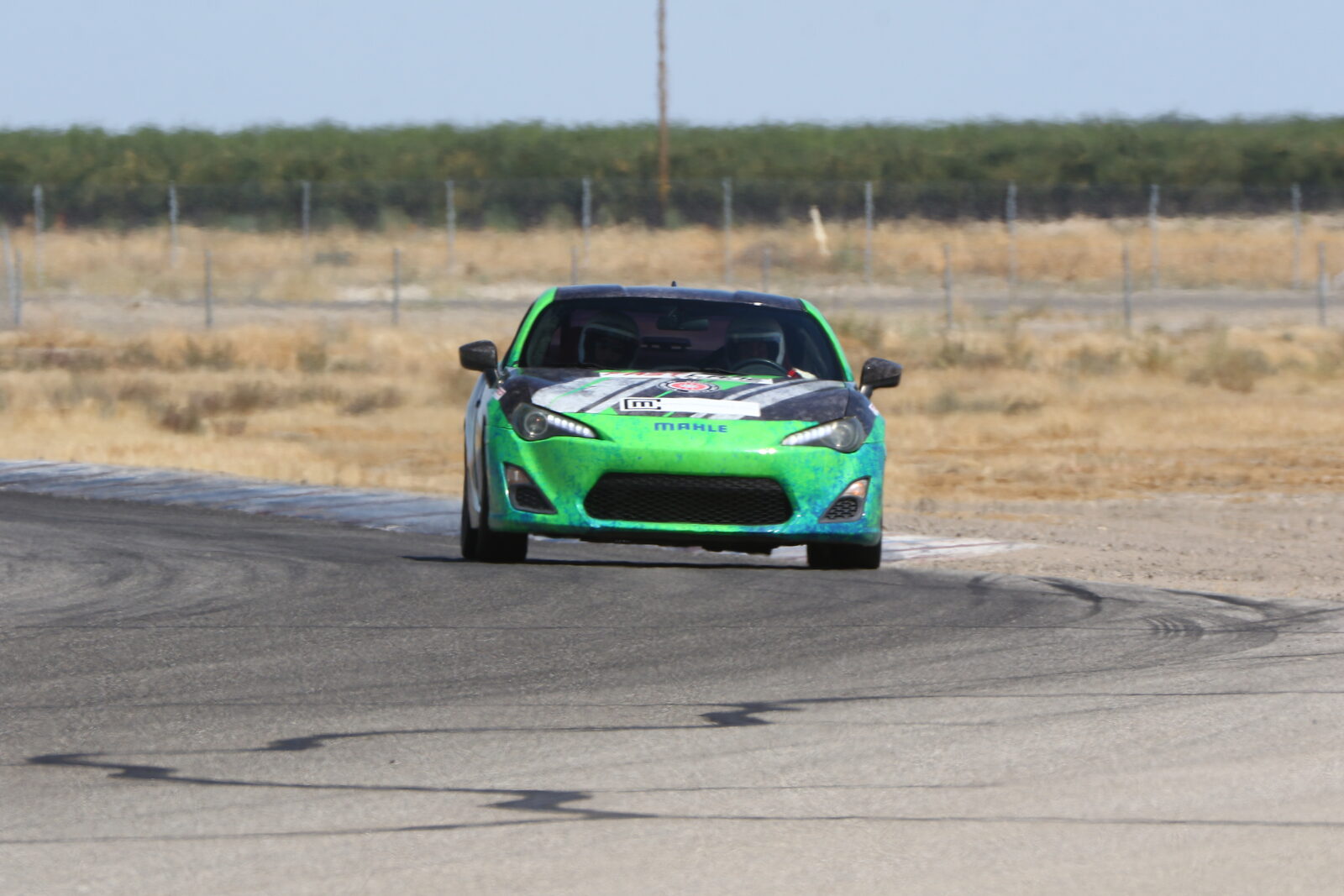
Every great racetrack has a personality. Some are grand. Some are beautiful. Some are intimidating from the moment you see them. Buttonwillow’s Classic course is different. It does not try to impress you with scenery or ceremony. It sits in the California Central Valley with a practical, almost understated confidence, as if it already knows what generations of racers have learned the hard way.
This place will find out who you are.
The Classic is the original Buttonwillow road course, and for decades it has been one of California’s most important proving grounds. It is where club racers learned racecraft, where track day drivers chased their first clean laps, where motorcycle riders found the edge of bravery, and where time attack competitors came to measure themselves against the clock. In its many configurations, and especially in 13CW, the Classic has become one of the benchmark circuits in the West.
People do not just run laps here. They set references here.
For many drivers, a Buttonwillow 13CW lap time becomes part of their identity. It is the number they compare after every modification, every tire change, every suspension adjustment, and every season of improvement. The layout has become a common language in California performance culture. Say “13CW” in a paddock and people know what it means. They know the corners. They know the mistakes. They know the lap that got away.
What makes the Classic so enduring is that it asks every question. It has low-speed corners that reward patience. It has medium-speed sections that demand balance. It has fast corners where confidence matters, but overconfidence gets expensive. It has elevation changes, camber changes, transitions, chicanes, bumps, and rhythm sections that make the lap feel less like a circuit and more like a puzzle.
And the puzzle changes depending on what you bring.
In a momentum car, the Classic is about flow. Every small lift matters. Every early throttle pickup counts. You are trying to preserve speed through Cotton Corners, place the car cleanly through the Bus Stop, and avoid scrubbing away the lap before you reach the faster sections. In a high-horsepower car, the same corners become a different problem. Now traction, braking stability, and throttle discipline matter just as much as courage. A driver has to resist the temptation to solve every corner with power.
In a race car, the Classic feels alive underneath you. It is not polished in the same way as a modern, freshly paved circuit. That is part of its character. The bumps are part of the test. The surface asks the suspension to work. The fast sections can unsettle a car that is too stiff, too nervous, or too aggressively driven. A good Buttonwillow setup is not just about grip on paper. It needs compliance, stability, rotation, and the ability to keep the tire in contact with the pavement when the track starts talking back.
That is why 13CW has become such a favorite for lap times. It is not a horsepower contest. It is not a single-corner hero lap. It tests the whole package. Driver, machine, tires, setup, discipline, patience, aggression, and feel all show up on the stopwatch. A car that is fast at Buttonwillow is usually fast for the right reasons.
On a motorcycle, the Classic becomes even more physical. Riders feel the bumps, cambers, and transitions through the bars, pegs, seat, and tires. The track rewards riders who are smooth with their inputs and brave enough to carry speed where the pavement is moving underneath them. Some sections feel flowing and natural. Others require discipline, because a motorcycle does not forgive lazy vision or abrupt throttle. The famous Buttonwillow corners become markers of trust: trust in the front tire, trust in the rear, trust in body position, and trust that the line you chose will still be there when the bike is leaned over and loaded.
That is why the Classic can be both frustrating and addictive. It rarely gives up a perfect lap. Even experienced drivers and riders come off track knowing exactly where they left time. A cleaner exit here. A later brake release there. A braver entry into Riverside. A tidier line over Phil Hill. A better launch onto the straight. The track stays in your head long after the session ends.
The facility itself is part of the experience. Buttonwillow has always had a working-racer feel. It is serious without being pretentious. The paddock is practical. The tire and fuel center matter. The garages, café, viewing areas, showers, RV hookups, and track services make it possible for everyone from a first-time track day driver to a professional team to operate comfortably. There is a reason racers keep coming back. Buttonwillow is not just a circuit. It is a place where people spend weekends, build friendships, test ideas, break parts, fix them, and go back out.
The Classic carries all of that history in its asphalt. It was born from California racing people who needed a place to go after Riverside disappeared. Over time, it became more than a replacement. It became its own institution. It became the place where drivers learned to be honest with themselves. It became the track where a clean lap means something because nothing about it is accidental.
That is the heart of the Classic. It is technical, bumpy, unforgiving, versatile, and deeply rewarding. It does not flatter you. It teaches you. It gives you enough room to chase speed, but not enough room to ignore consequences. It is a track for people who want to improve, not just circulate. A track for racers, riders, builders, testers, instructors, and anyone who understands that the stopwatch only tells part of the story.
At Buttonwillow Classic, the real reward is not just the lap time. It is the feeling of finally putting the lap together.
Explore The Classic on our track page for specs, the official track map, and the famous corners that make up the lap.